Laser cleaning for metal
in Switzerland.
Cleaning metal parts with the pulsed fibre laser: stainless steel, aluminium, structural and tool steel, contactless, dry, with no blasting media and no chemicals. We come to you on site, in the workshop, in the hall or on the building site. The laser removes only contamination, oxide and scale, the material keeps its geometry and surface finish.
- Mobile across Switzerland
- Reply within 24 h
- SUVA-compliant, no chemicals

 Before
After
Before
After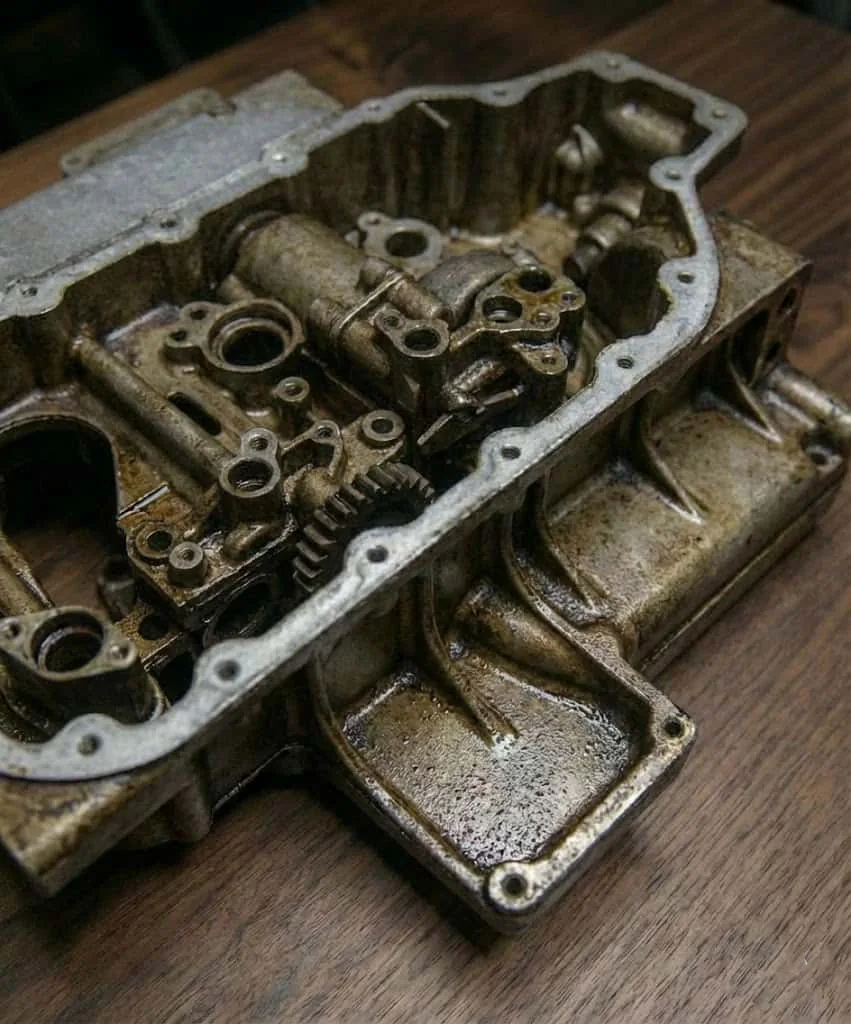
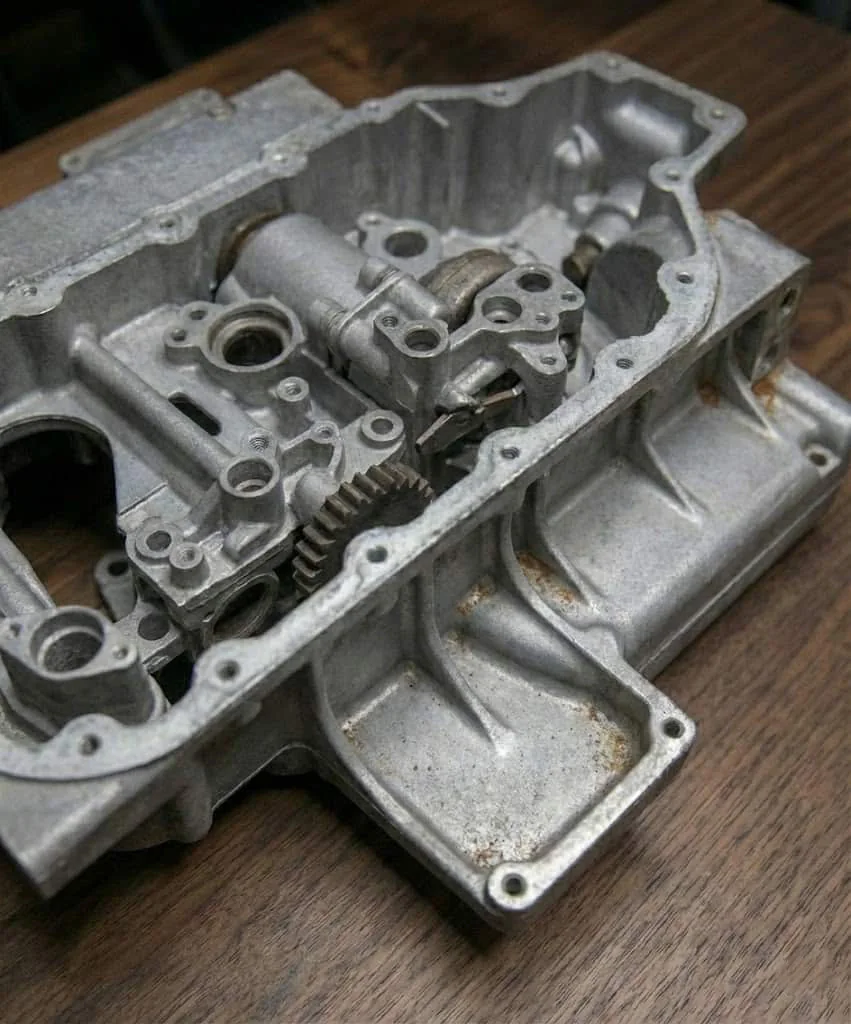 Before
After
Before
After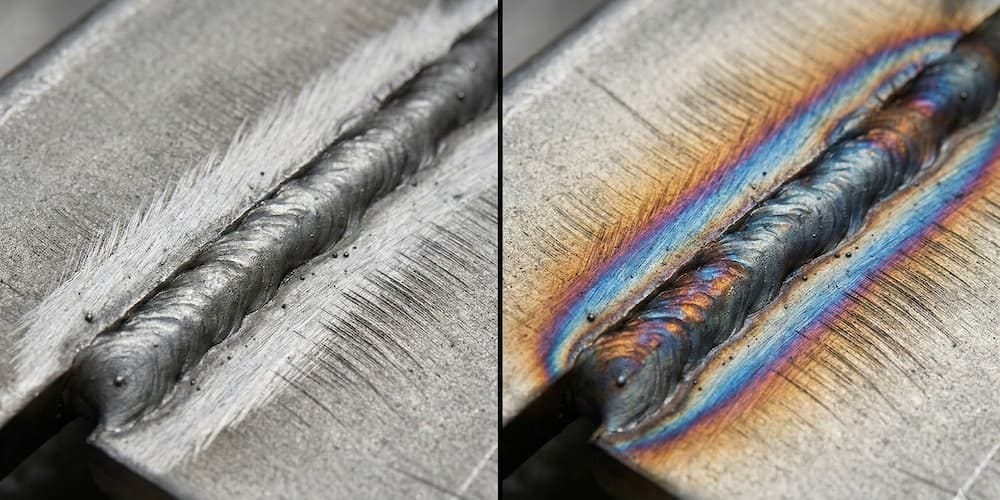
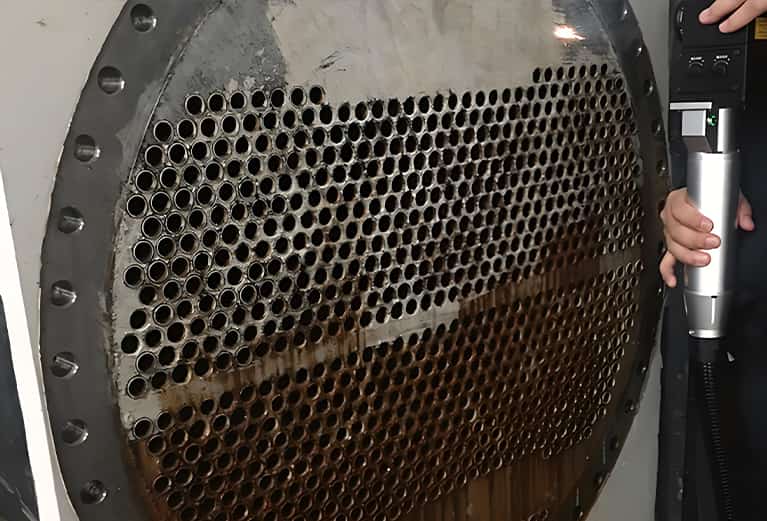
 Before
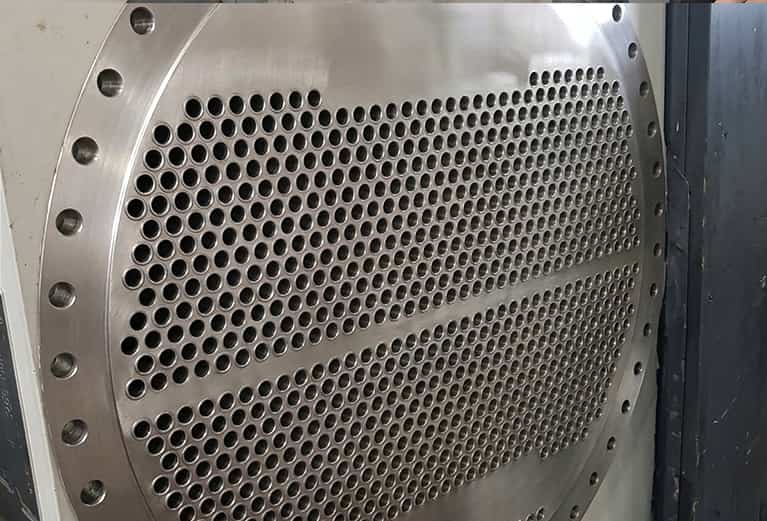
After
Before
AfterLaser cleaning metal: before and after
Choose an example below. Drag each comparison slider to see how laser metal cleaning removes rust, oil and industrial deposits without changing the component geometry.
What is laser cleaning for metal
and how does it differ?
Laser cleaning of metal means cleaning steel, stainless steel, aluminium and other metals with a pulsed fibre laser. Short, high-energy pulses of light are directed at the surface. Whatever sits on the surface, that is dirt, oil, paint, oxide or scale, absorbs the energy and vaporises. The base metal reflects the same wavelength for the most part and stays cold.
The international term laser metal cleaning describes the same principle. In practice this means: no compressed air, no blasting media, no pickling. The removed particles are captured right at the working point by an extraction unit with a HEPA filter, the material stays accurate in dimension and geometry.
Unlike mechanical or chemical methods, laser cleaning of metal is selective: pulse energy, frequency and feed rate are matched to the material and the layer thickness. This means even threads, weld seams, beads and components with tight tolerances can be treated without changing the geometry.
Removed layer by layer,
the base metal stays untouched.
Pulse 1 hits the contamination. Oil, grease, release agents and organic residues absorb the light immediately and vaporise. On a stainless steel surface, the base material stays much cooler than the back of your hand.
Pulse 2 works through oxide and scale. Mill scale, weld discolouration, corrosion products: anything with a different absorption coefficient from the base metal is selectively removed.
Pulse 3 reaches the passive layer or the bare metal. The ratio reverses: the material reflects the laser light, cleaning stops on its own. On stainless steel, the protective chromium oxide layer stays intact or regenerates in air.
- Wavelength
- 1064 nm (near-infrared)
- Pulse duration
- 100 - 240 ns
- Frequency
- 20 - 2000 kHz
- Track width
- 20 - 100 mm scannable
Comparison: laser, sandblasting,
chemical pickling or grinding
| Criterion |
Laser
Pulsed fibre |
Sandblasting
Blasting media |
Chemical pickling
Acid bath |
Grinding
Mechanical |
|---|---|---|---|---|
Material removal | No removal only oxide absorbs | Erosion surface roughened | Risk if left too long | Scoring visible marks |
Blasting media / chemicals | None dry, contactless | High consumption corundum, glass beads | Acids pickling paste, fumes | Discs fleece pads, abrasives |
Waste / disposal | Minimal HEPA filter dust | High contaminated granulate | Hazardous waste sludge, rinse water | Moderate swarf, fine dust |
Precision on geometry | Very high seam, thread, bead | Low masking required | Whole surface immersion bath, all over | Manual operator-dependent |
Thin sheets / aluminium | Suitable no deformation | Deformation stress in the sheet | Caution risk of embrittlement | Deformed scoring visible |
Mobile, without dismantling | Yes on site in the hall | Limited cabin required | No workshop immersion bath | Yes hand-held tool |
Reproducibility | Parametrised can be documented | Operator depends on hand | Batch depends on the bath | Operator depends on hand |
Ready for coating | Immediately no rinsing needed | After cleaning remove blasting media | After drying rinse, neutralise | Rework deburr, clean |
Laser Recommended
Pulsed fibre · mobileSandblasting
Blasting mediaChemical pickling
Acid bathGrinding
MechanicalMetals suited for
laser cleaning
| Material | Suitability | Typical application |
|---|---|---|
| Stainless steel 1.4301 · 1.4404 · 1.4571 | very good | Weld discolouration, lubrication films, light corrosion. The passive layer stays intact. |
| Structural and constructional steel S235JR · S355 · Corten | very good | Rust, mill scale after rolling, old coatings. Steel beams, profiles, vessels, machine frames. |
| Aluminium EN AW-5754 · 6060 · 7075 | good | Anodised layer, release agents, oxides before welding. Parameters slightly more conservative due to high reflectivity. |
| Cast iron EN-GJL · EN-GJS | very good | Burn crust, release agents and paint on engine blocks, pump housings, old machine parts. |
| Copper and brass CW004A · CuZn37 | good | Patina kept or removed as you wish. Very high reflectivity, test on a discreet spot recommended. |
Laser cleaning stainless steel
Stainless steel carries a thin, self-healing chromium oxide layer that makes it corrosion-resistant. Welding, grinding or pickling can locally destroy this passive layer. The pulsed laser removes weld discolouration, weld spatter and oxides gently and leaves the passive layer intact. The surface regenerates in air, with no need for chemical re-passivation.
We clean 1.4301, 1.4404 and 1.4571 in the common Swiss standard grades. Typical jobs come from food and pharma production, plant engineering, tank manufacturing and architectural metalwork. The process is dry, leaves no blasting media residue and is compatible with the hygiene requirements of EHEDG environments.
The international term laser cleaning stainless steel describes the same process. English-speaking customers will also find it as laser metal cleaning.
- Discolouration and weld oxides after TIG or MIG welding
- Lubricants and release agents on food and pharma equipment
- Light flash rust on weld zones and cut edges
- Preparation for bonded and painted joints
Laser cleaning aluminium
Aluminium reflects laser light strongly, so we use adjusted pulse energy and shorter dwell time. The process removes oxide layers before welding, release agents from extrusion, paint residues and anodised coatings, without bulging or tarnishing the surface.
We work on extruded profiles, sheets and milled parts in EN AW-5754, 6060, 6082 and 7075. In vehicle construction and aerospace supply, pre-cleaning before welding is decisive for the seam and its strength. With the pulsed fibre laser the seam is reproducibly clean, the process can be documented and is free of solvents.
Known in English as laser cleaning aluminum. For very thin sheets under 0.5 mm, we run a test cleaning before the job and provide the result in writing.
- Oxide layer just before TIG or MIG welding
- Release agents and lubricants after extrusion
- Anodised layers or powder coat removed selectively
- Preparation of bonding surfaces in vehicle and body construction
Cleaning metal parts
with the pulsed fibre laser
-
01Weld seam cleaning Removing weld discolouration, weld beads and weld spatter from stainless steel and steel seams, without touching the seam.
-
02Before welding Aluminium oxidises within hours. The laser removes the oxide layer right before the seam, with no solvents.
-
03Tool and mould making Deburring and decarburising injection and die-casting moulds, without changing the cavity.
-
04Bonding preparation Defined, oil-free and low-oxide surfaces for structural bonds in body and rail vehicle construction.
-
05Paint and coating removal Removing powder and wet paint in spots or over the whole surface, without weakening the material.
-
06Restoration of historical parts Carefully de-rusting wrought iron, castings and old machine parts, without destroying the patina.
-
07Maintenance in production halls Cleaning conveyor belts, fixtures and plant components on site, without dismantling the line.
-
08Patina care, bronze and copper Selective cleaning on architectural metal and sculptures, deliberately keeping or restoring the patina.
-
09Vehicle restoration De-rusting and stripping paint from body panels, frames and chassis components, with no blasting media in the cavity.
-
10Inspection and goods receipt Exposing contaminated identification marks, making serial numbers and weld stamps visible.
Mobile laser metal cleaning
on site
Mobile laser cleaning of metal becomes attractive for you when dismantling, transport or downtime cost more than an on-site visit. We work directly on the component, in the workshop hall, on the building site or outdoors. The pulsed fibre laser, control unit and extraction make up one compact unit that we set up ready for work within 30 minutes.
Our service area covers all 26 cantons, from Lake Constance to Valais. The usual lead time is between two and seven working days from order confirmation. Depending on the power level, the unit needs a 230 V Schuko or 400 V CEE 16 A connection.
You can find more about the general service under Industrial Laser Cleaning. If it is specifically about rust, also read Laser rust removal in detail. And everything on costing can be found under Price and cost.
Safety, SUVA
and workplace protection
Laser Class 4
Industrial pulsed fibre lasers are Class 4 to EN 60825-1. Protective measures are mandatory, even for brief use.
OD 7+ at 1064 nm
We and everyone in the laser zone wear protective goggles with OD 7 or higher for the laser wavelength.
EKAS 6508 / SUVA
Use follows EKAS guideline 6508, SUVA practice and DGUV 11 requirements for cross-border work.
HEPA EN 1822
An extraction unit with H13/H14 filter per EN 1822 captures particles at the working point. No dust cloud, no carry-over.
Demarcated laser zone
Visual barriers, warning signs, access control. The zone is defined before work starts and dismantled at the end of the day.
Laser safety officers
Our operators are trained as laser safety officers and certified on the equipment used.
Hot work
For work near combustible materials, we coordinate the hot work permit with the client.
Report on request
On request you receive a cleaning report with parameters, part photos and confirmation of protective measures.
Frequently asked questions about
laser cleaning for metal
Ready for a clean,
passive metal surface?
Send us one to three photos of your part. We reply within 24 hours with a concrete quote, free and non-binding.